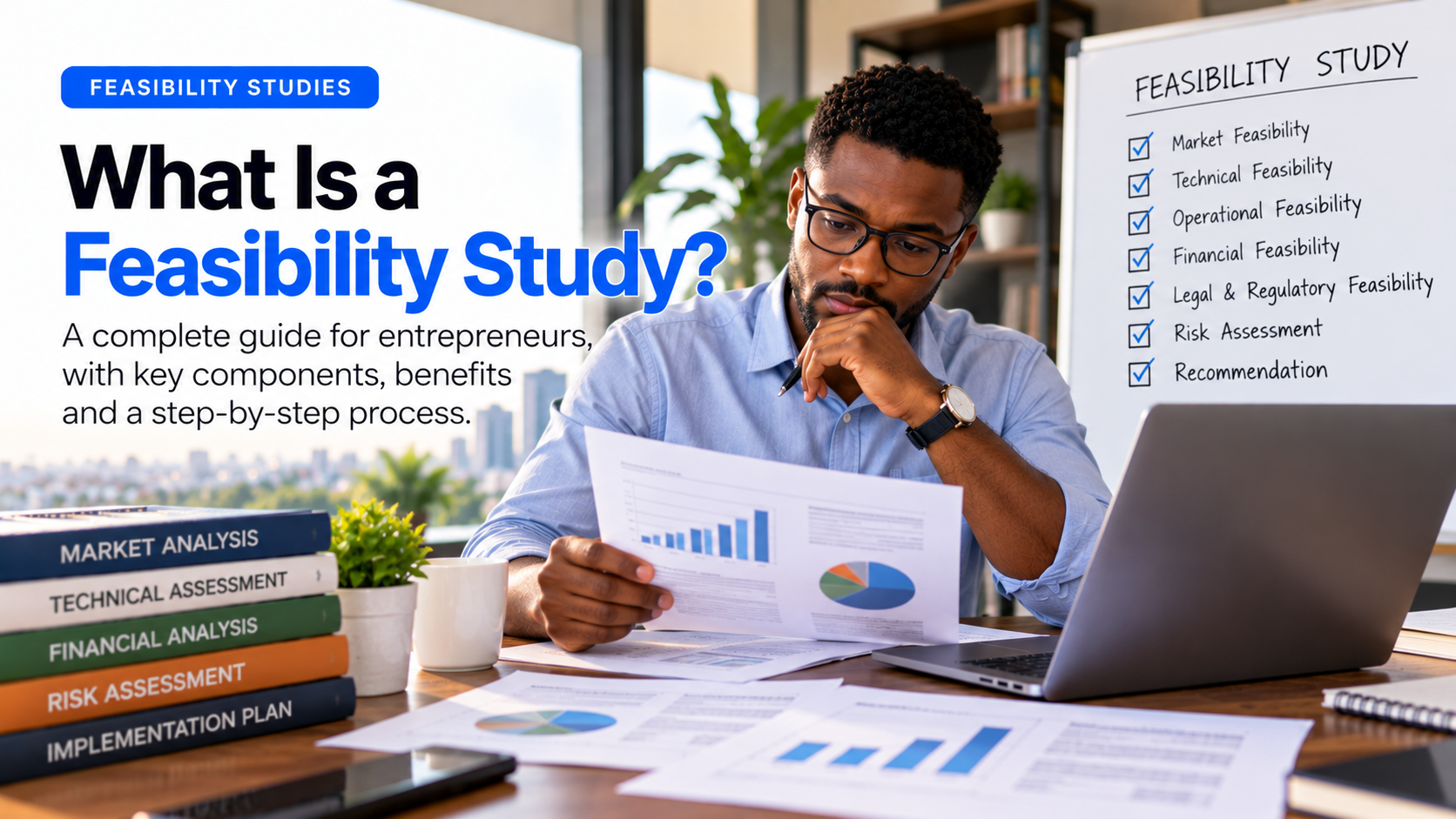
How to Validate a Business Idea Before You Invest a Dollar
A four-step feasibility framework used by disciplined founders.
Why validation beats enthusiasm
Most businesses do not fail because their founders lacked passion. They fail because the founders never rigorously tested whether the idea could actually work. Validation is not pessimism — it is the discipline of separating a plausible idea from a viable one.
The four dimensions of feasibility
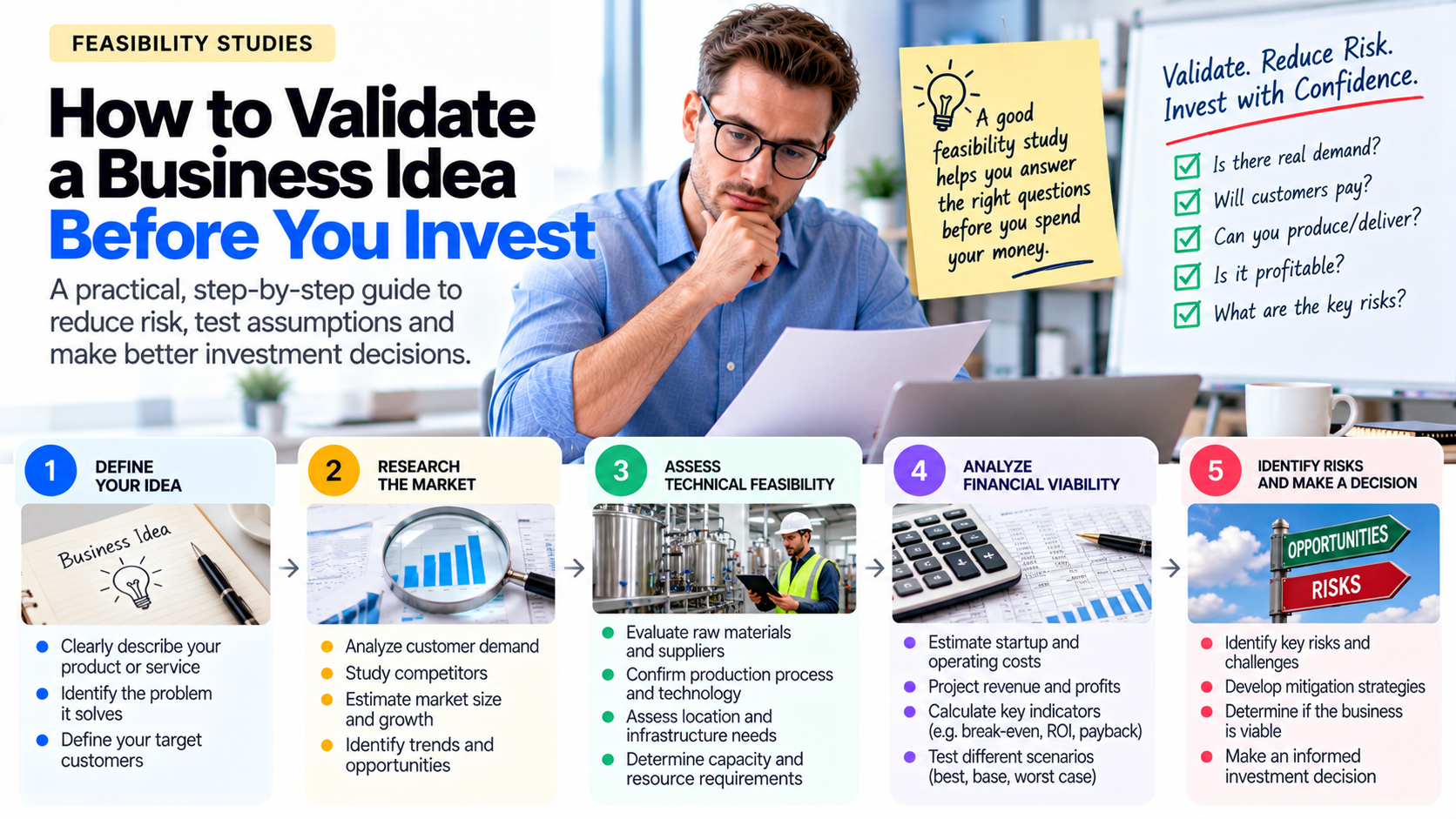
A real feasibility study asks four questions, in order:
- Market feasibility. Is there a big enough group of people with the problem you propose to solve, and can you reach them affordably?
- Product feasibility. Can you actually build the offering with the resources, skills, and time you have?
- Financial feasibility. Do the unit economics work? Does the business make more money than it costs to run?
- Operational feasibility. Can you sustain it once real customers arrive?
Skipping any of the four leaves a blind spot large enough to sink the business.
Step 1 — Sharpen the customer, not the idea
Most founders start with the product. Better founders start with the customer. Write a one-paragraph description of the person who has the problem — their job, their budget, how they currently solve it, and how urgently they need a better answer. If you cannot write this paragraph without hand-waving, that is your validation finding.
Step 2 — Run a "willingness to pay" test
Demand signals are easy to fake. Willingness to pay is not. Do at least one of the following: pre-sell the product, take a refundable deposit, or make five real conversations with prospective customers where the words "I would pay X for this" leave their mouth without being coached.
Step 3 — Build the smallest possible model
On one page, project: cost of acquiring a customer, monthly revenue per customer, gross margin, and expected retention. If any two of these numbers are wildly implausible, the business is not yet financially feasible.
Step 4 — Write down what would change your mind
Before you invest more, list three findings that would kill this idea. Then go looking for them. If you cannot find them, the risk-adjusted case to proceed just got much stronger.
What a good feasibility study looks like
A useful feasibility study is not a 40-page document. It is a clear verdict, three or four charts, and a specific list of the risks that remain. That is exactly what LoDuko generates when you finish a validation interview.